.JPG)
:::
“Dressing” for the Occasion: A Cultural Exchange Across Time
By donning traditional attire imbued with deep historical roots and cultural richness, a beautiful chapter of city diplomacy unfolds.
Curator / Vivian Luo
Updated at 2026-07-27
Preface:A Cultural Dialogue Across Time
A garment that appears simple at first glance often carries profound historical memory and cultural meaning. Clothing is not only a reflection of personal identity and temperament, but also an expression of a nation’s aesthetic values and philosophy of life. As an important cultural medium, traditional attire embodies each country’s unique historical trajectory and enduring cultural heritage. When traditional garments from different nations come together within the same space, the encounter becomes more than a visual display; it transforms into a cultural dialogue that transcends time and language. Wearing attire shaped by centuries of history and tradition is not merely an appreciation of beauty, but also a gesture of respect and understanding toward another culture. Through clothing as a medium of cultural interaction, we gain insight into diverse values and ways of life. Such exchanges deepen connections between people and between cities, opening new opportunities for friendship and collaboration, and further advancing the goals of city diplomacy.
.jpg)
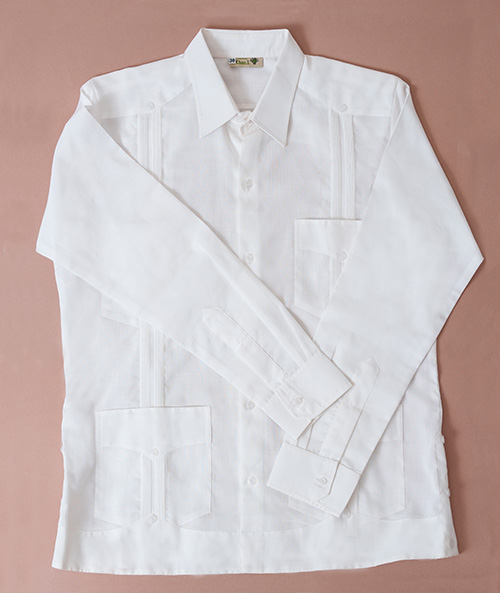
Belize: Cuban Shirt (Guayabera) and Belizean Cotton Shirt
The Guayabera is a traditional shirt originating in the Caribbean, first emerging in Cuba and later spreading widely across Mexico, Belize, Panama, and other Central and Latin American countries through Spanish colonial and Caribbean cultural exchange. In Belize, the Guayabera is not only everyday attire but is also regarded as national formal wear suitable for official occasions, symbolizing the fusion of Caribbean culture and tropical lifestyle.
Belizean Guayaberas are typically crafted from white or light-colored cotton or linen, offering breathability and comfort ideally suited to the tropical climate. Distinctive design features include two vertical pleats with embroidery on both the front and back, along with four pockets—two on the chest and two at the waist—combining practicality with refined detailing. The shirt is traditionally worn untucked, creating a relaxed yet dignified style. Today, the Guayabera remains favored by government officials and business leaders in Belize. It represents both cultural identity within the Caribbean and Central America and an ability to maintain elegance and formality in warm climates, expressing the nation’s distinctive Caribbean spirit and confidence.
Gifted by John Briceño, Prime Minister, Belize

India: Nehru Jacket
The Nehru Jacket is named after Jawaharlal Nehru, the first Prime Minister of India, and carries significant symbolic meaning. Following India’s independence, Prime Minister Nehru sought to express national confidence and modern aspirations through attire. He adapted traditional Indian garments such as the achkan and sherwani, simplifying their form and incorporating modern design elements for everyday wear. As Nehru frequently wore this style at international events, it gradually became known as the Nehru Jacket. During the Cold War, alongside India’s non-alignment diplomatic policy, the jacket came to symbolize peace, rationality, and national identity.
Characterized by its clean and elegant design, the Nehru Jacket harmoniously blends Eastern and Western sartorial elements. Its most recognizable feature is the stand collar, conveying dignity and restraint. Compared to traditional long robes, it is shorter, more tailored, and allows greater ease of movement. The front typically features a straight row of buttons. Common fabrics include silk and cotton, and colors are often white, black, gray, navy, or burgundy. It may be worn on its own or paired with a shirt, a traditional kurta, or Western-style trousers, embodying Indian heritage while adhering to contemporary standards of formal dress.
Gifted by Gourangalal Das, Director-general, India Taipei Association
<Read More "Nehru Jacket">
.webp)
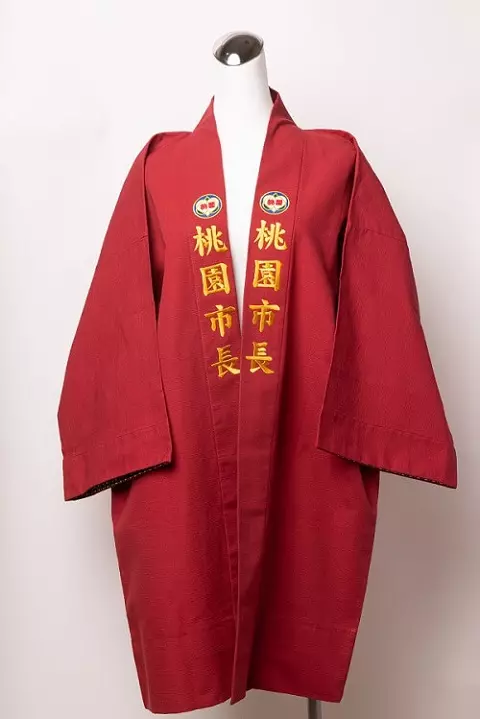
Japan: Happi Coat
The Happi is a traditional Japanese short coat whose origins can be traced back to the Edo period (17th–19th centuries). It was initially worn by the retainers of samurai families, merchants, and artisans as workwear or identifying garments. Family crests or shop emblems were printed on the back to signify affiliation. Over time, the Happi evolved into an important symbol of popular culture and festival traditions, and it is now widely worn at celebrations and commercial events.
The Happi is typically a hip-length coat with slightly wide sleeves, commonly made of cotton for ease of movement and washing. Traditional colors are predominantly indigo or black, reflecting steadiness and the spirit of craftsmanship. The back often features a family crest, shop name, or the character 「祭」(festival), while the collar may bear the name of an organization, shrine, or locality. It is usually secured with a sash to fasten the front panels. With its simple yet striking design, the Happi symbolizes group honor and solidarity, embodying the Japanese values of diligence, unity, and social bonds. Today, it is no longer limited to religious or traditional occasions. Many local governments and corporations design distinctive Happi coats to promote tourism and community events. At international gatherings, Japanese representatives frequently wear the Happi as semi-formal attire, expressing cultural warmth and national identity.
Gifted by Kensaku MORITA, Governor, Chiba Prefecture and Kazunari KOIZUMI, Mayor, Narita City
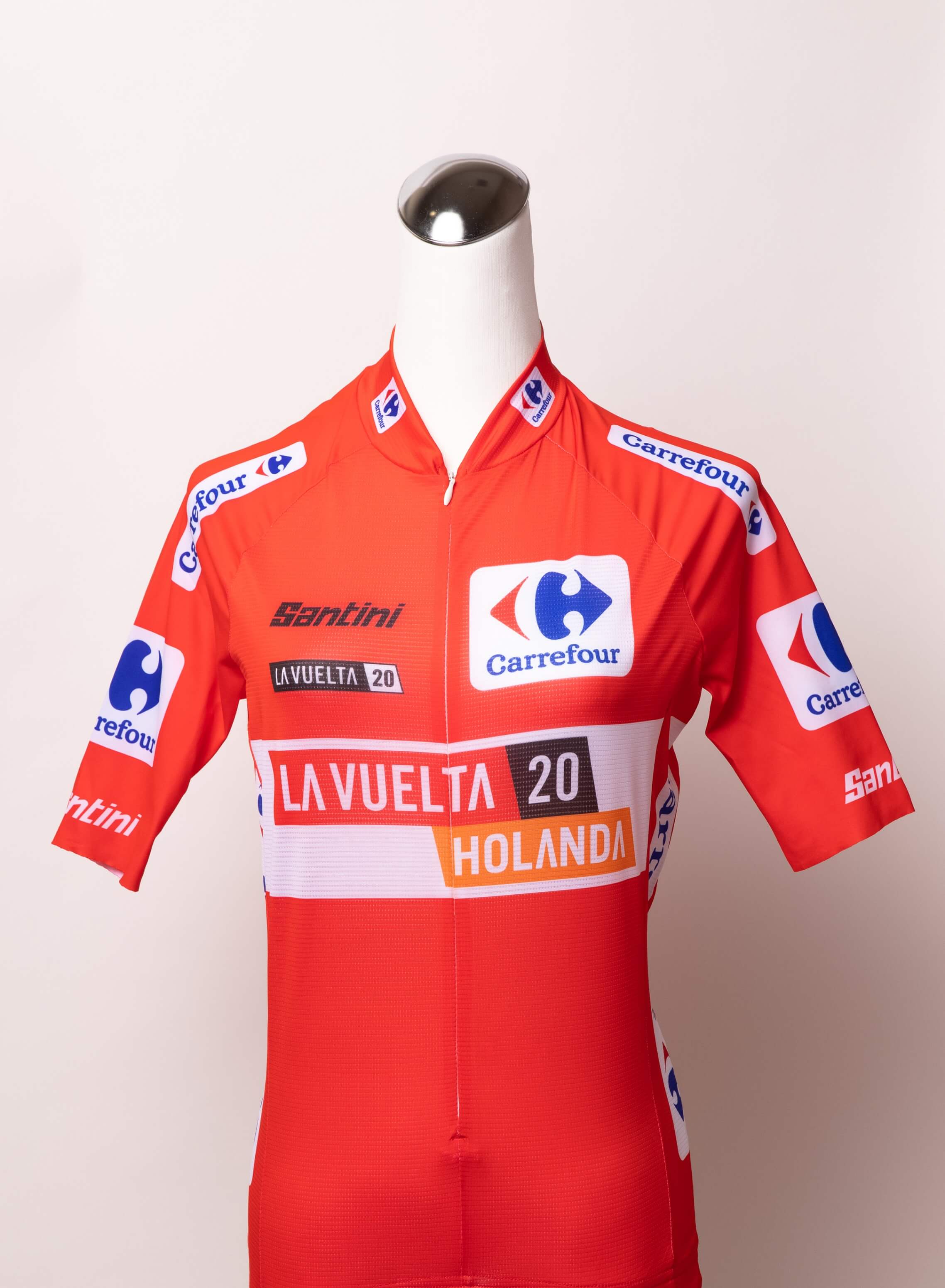
The Netherlands: Cycling Jersey
The Netherlands is widely regarded as one of the world’s most bicycle-friendly nations and is often referred to as the “Kingdom of Bicycles.” With a population of approximately 17 million and more than 22 million bicycles nationwide, cycling is deeply embedded in everyday life. Yet this was not always the case. In the 1970s, Dutch society was heavily dependent on automobiles. The 1973 oil crisis, however, led to soaring fuel prices and significantly disrupted car-based daily life. As bicycles require no petroleum, they quickly regained popularity and became the preferred mode of commuting. At the same time, the Dutch government launched what would become one of the world’s most extensive bicycle infrastructure projects, resulting in today’s expansive cycling network and stimulating the growth of the national bicycle industry. Utrecht, the country’s fourth-largest city, was recognized in 2022 as the world’s most bicycle-friendly city.
Orange is the national color of the Netherlands, derived from the House of Orange-Nassau. Accordingly, Dutch national teams appear in bright orange jerseys at international competitions, symbolizing royal heritage, unity, and national confidence. In addition to orange, red, white, and blue accents, which reflect the colors of the Dutch flag, are often incorporated at the collar and cuffs, creating a strong visual identity. Within this cultural context, the Dutch cycling jersey has become more than athletic attire; it represents national identity and cultural pride. By integrating sport and culture as instruments of diplomacy, the Dutch government frequently uses the cycling jersey as part of its official image, making it a symbol of national branding and a meaningful gesture of friendship and exchange.
Gifted by Klaas Verschuure, Vice Mayor, City of Utrecht
<Read More "Cycling Jersey">
.jpg)
Related