
:::
Exploring the World through Writing
Hailing from different countries and cities, these pens transform encounters into memories and preserve the friendship between cities.
Curator / Janice Liao
Updated at 2026-07-27
Preface
A stroke of the pen connects two cities.
Presented by representatives of various countries and municipalities during official exchanges, each pen reflects the distinctive character of its place of origin. Whether in its material, decorative motifs, or design details, every piece embodies the culture and landscape of its homeland. More than practical writing instruments, these pens serve as keepsakes that transcend distance. Each time the pen is lifted to write, it recalls that meeting, that conversation, and the meaningful moments shared.

Brno Fountain Pen — Brno, A Sanctuary of Architecture
Brno, the second-largest city in the Czech Republic, is located on the eastern foothills of the Bohemian-Moravian Highlands, at the confluence of the Svratka and Svitava Rivers. With a rich historical legacy and diverse architectural styles, Brno is often regarded as a sanctuary of architecture. Notable landmarks include Špilberk Castle and the Cathedral of Saints Peter and Paul. The city is also home to the Tugendhat Villa, a UNESCO World Heritage Site and a masterpiece of modernist architecture.
The Brno fountain pen is an original work handcrafted by designer Michal Čilák. Each pen is made from wood carefully selected by the designer. It combines grapevine timber with colored resin in a distinctive way, giving each pen a unique appearance.
Gifted by Markéta Vaňková, Mayor, City of Brno
<Read More "Brno Fountain Pen">
.JPG)
Business Card Holder and Ballpoint Pen — Gumi, A City of Electronics
Gumi City is situated in the mid-western part of North Gyeongsang Province, South Korea, along the Nakdong River. Surrounded by Geumosan, Cheonseongsan, and Seonsan, Gumi is known for its scenic beauty. Geumosan Provincial Park, designated in 1970, is famous for its dramatic rock formations and steep cliffs, and features attractions such as a cable car, Haeunsa Temple, and Daehye Falls.
The ballpoint pen presented by Gumi is adorned with traditional Korean mother-of-pearl inlay craftsmanship, and the city emblem is printed on the barrel. The emblem features two circles representing Gumi as a high-tech industrial city and as a center of cultural heritage, connected by a Möbius strip symbolizing infinite possibilities. This design conveys the coexistence of advanced industry and traditional culture. An orbital motif evokes the dynamism of the electronics sector, reflecting the city’s vigorous industrial development.
Mother-of-pearl inlay is a traditional decorative technique in which thin slices of abalone or seashell are embedded into the surface of an object. This method enriches the object’s coloration, producing iridescent, jewel-like brilliance that shifts beautifully with changes in light.
Gifted by Jang-Ho Kim, Mayor, Gumi City
<Read More "Business Card Holder and Ballpoint Pen">
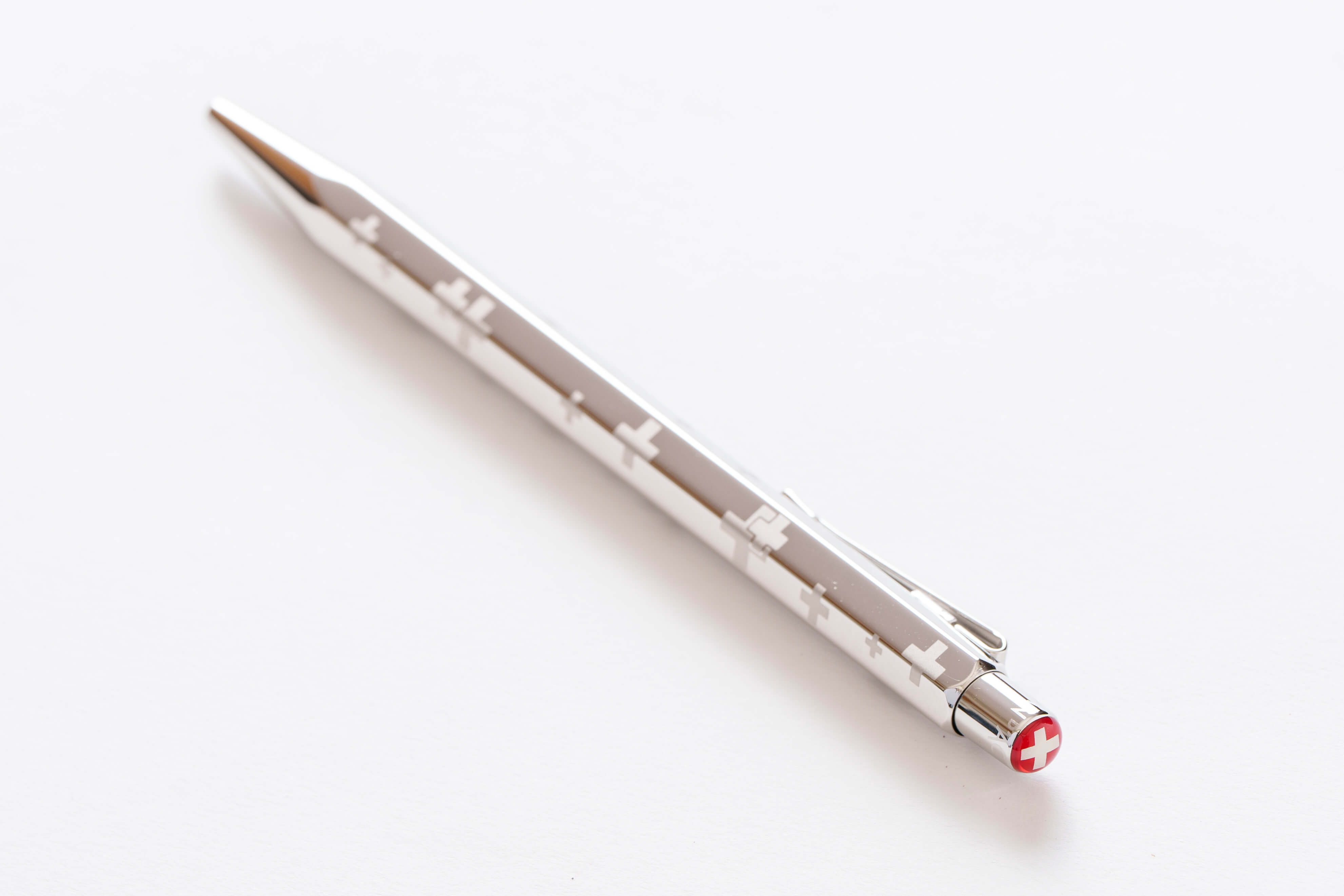
Swiss Caran d'Ache Ballpoint Pen — Geneva, A Lakeside City
Caran d’Ache is a century-old Swiss brand renowned worldwide for its masterful pen-making craftsmanship and minimalist design. Founded in Geneva in 1915, Caran d’Ache remains a family-owned company and continues to manufacture all of its products exclusively in Switzerland.
Located in western Switzerland, Geneva is a picturesque lakeside city celebrated for its natural beauty. Lake Geneva and the Jet d’Eau are among its most iconic landmarks. One of the best places to admire the fountain is Bains des Pâquis, a beloved public bathing site frequented by locals. The city offers distinct charms throughout the year; warm sunshine and shimmering lake views in summer and the pleasures of sauna bathing and the indispensable Swiss cheese fondue in winter.
This pen features the brand’s classic hexagonal barrel design, incorporating the Swiss cultural emblem—the white cross. On the Swiss flag, white symbolizes peace, justice, and light, while red represents the people’s victory, happiness, and passion. The unique square shape of the flag reflects Switzerland’s long-standing commitment to neutrality and fairness in diplomacy. These symbolic elements lend the pen a strong and distinctive identity.
Gifted by Claudia Fontana Tobiassen, Director, Trade Office of Swiss Industries
<Read More "Swiss Caran d'Ache Ballpoint Pen">
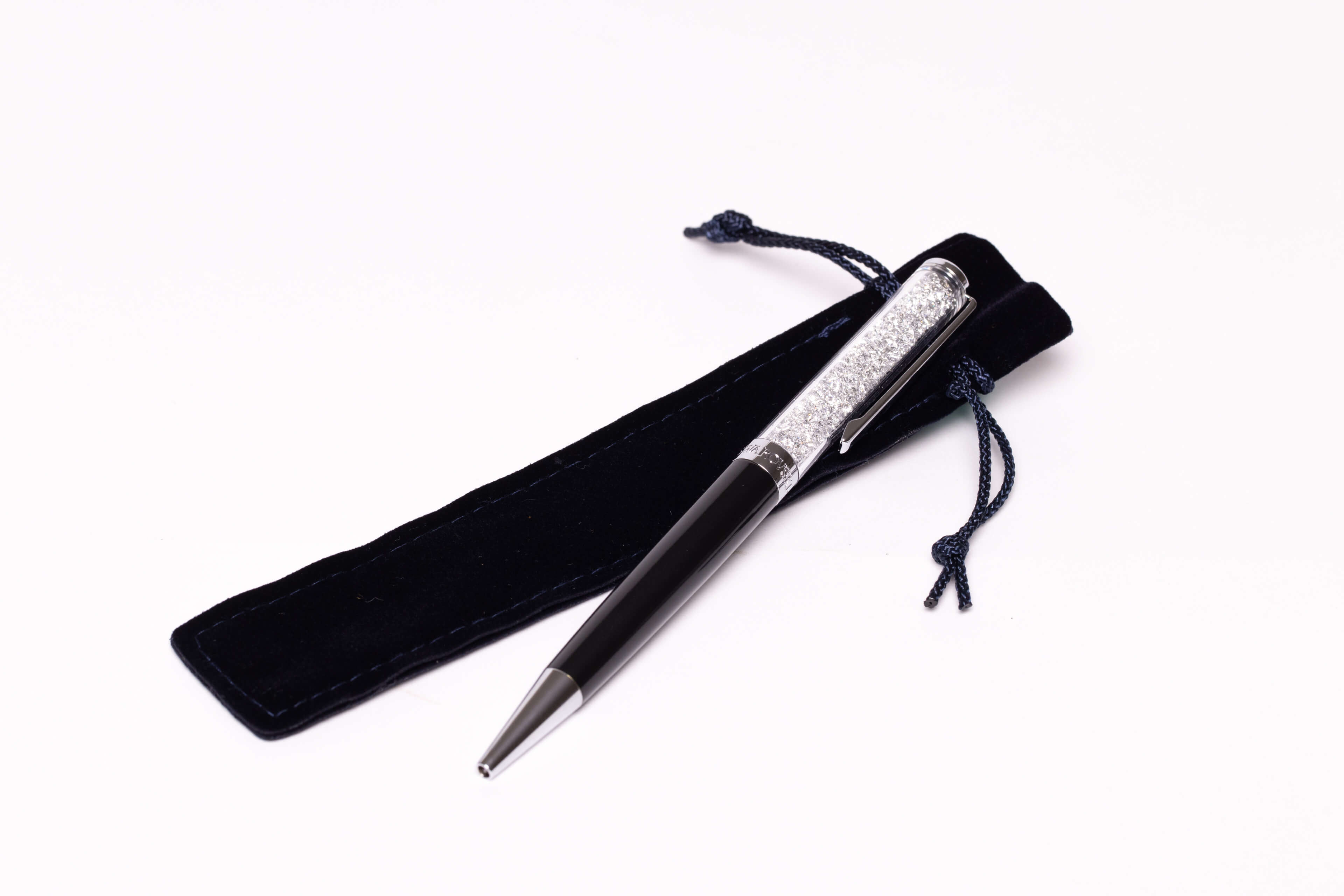
Crystal Pen — Wattens, The Crystal Town
Presented by the Austrian Commercial Office, this crystal pen was crafted by the renowned brand Swarovski. The pen features a black barrel with the Swarovski name engraved on the clip. Approximately 480 crystals are embedded in the center of the barrel, allowing the pen to emit a refined, radiant brilliance while writing. Designed with a replaceable refill, it balances aesthetic elegance with sustainability, making it a representative luxury writing instrument.
Nestled at the foot of the Austrian Alps, Wattens is the birthplace of Swarovski, where the company’s headquarters and the Kristallwelten are located. This scenic town offers sweeping alpine views, where visitors strolling through the old quarter can look up to see the majestic Alps rising in the distance. The famous Inn Cycle Path runs from Innsbruck in Austria through Wattens and onward to Passau in Germany, allowing cyclists to travel directly through the town while enjoying the surrounding landscapes.
Gifted by Hermann Ortner, Representative, Austrian Commercial Office in Taipei
<Read More "Crystal Pen">
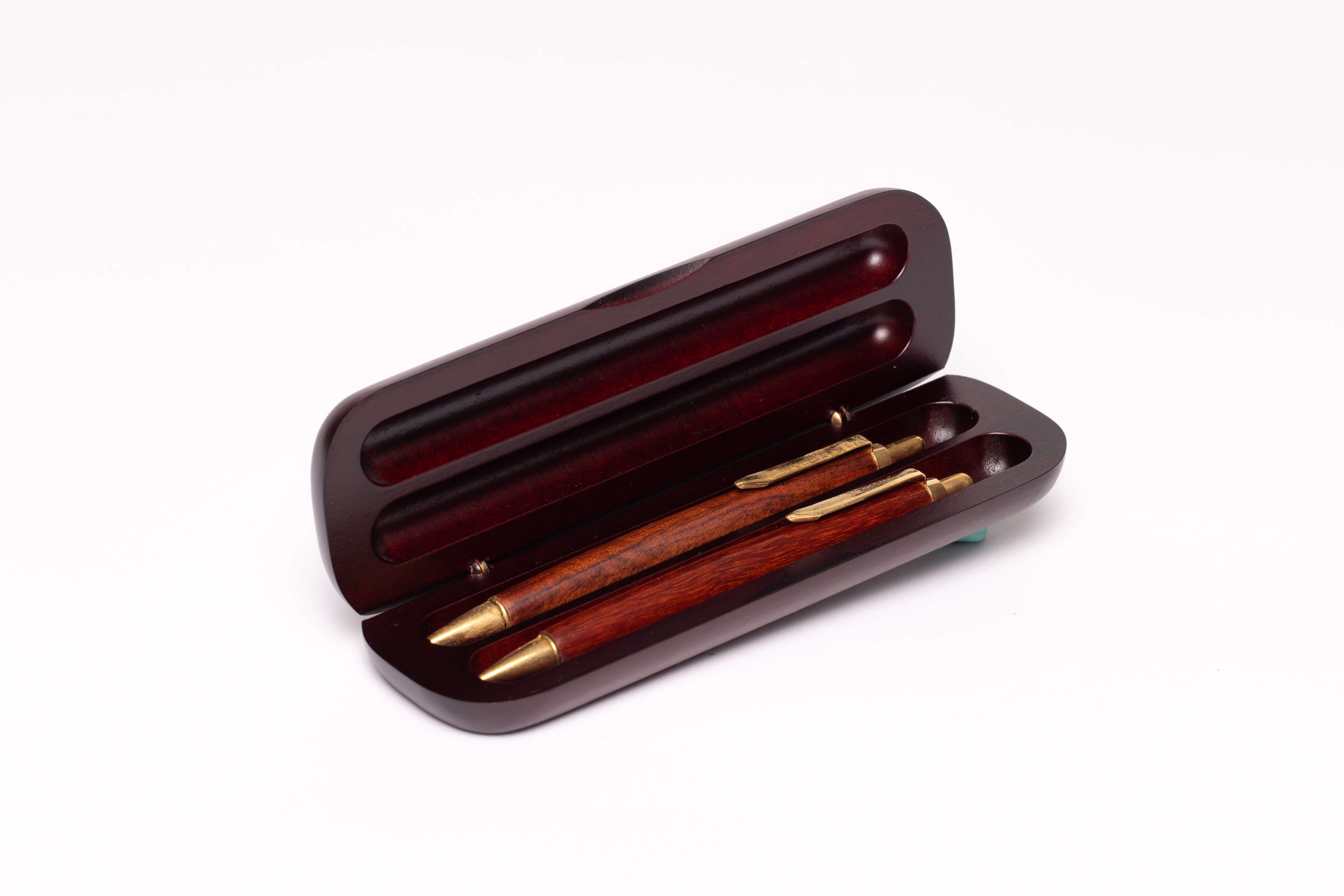
Wooden Pen Set — Eniwa, The Town of Flowers
Eniwa City is located in southern Hokkaido, between Sapporo and New Chitose Airport. With convenient transportation links and a mild climate, the city is known for its abundant natural scenery. Approximately 45% of the city is covered by forest. Eniwa Park is a large urban park spanning approximately 42 hectares, featuring facilities such as a baseball field and athletics track, with nearly half of its area preserved as natural forest. Venturing deeper into the woodland leads to the headwaters of the Yukanboshi River, where clear spring water can be seen emerging from underground.
The wooden pens are crafted from natural timber, preserving the grain patterns and warm tactile quality of the wood. As each piece of wood varies in color and texture, every pen is one of a kind. Over time, the wood’s tone and grain continue to evolve naturally. The barrel is carefully polished and treated for durability, offering a comfortable grip suitable for extended writing while reflecting personal taste. Paired with a metal clip and nib, the design harmonizes natural materials with modern aesthetics, combining practicality with understated elegance.
Gifted by Yutaka HARADA, Mayor, Eniwa City
<Read More "Wooden Pen Set">
.jpg)
Pen Gift Box — Kagawa Prefecture, Gateway to Shikoku
Presented by the Kagawa Prefecture Tourism Association, this pen gift box contains a multifunction writing instrument that combines a ballpoint pen and mechanical pencil in one. By rotating the middle section of the barrel, users can easily switch between functions. The design employs a special printing technique to recreate the elegance of traditional Japanese maki-e lacquer art.
Located in northern Shikoku, Kagawa Prefecture enjoys a warm climate and abundant sunshine. Its symbolic landmark, Mount Iino—also known as Sanuki Fuji—is beloved for its graceful conical shape and is one of the region’s most recognizable landscapes. Whether viewed from the plains or the city, its distinctive silhouette stands as a defining image of Kagawa. Another must-visit destination is Kotohiki Park by the sea. On spring evenings, soft illumination lights up rows of cherry blossoms, making it a renowned site for partaking in yozakura, or viewing sakura at night. Visitors can stroll along the pathways, admiring the blossoms’ pale pink glow under the lights while enjoying the tranquil coastal breeze unique to Kagawa.
Gifted by Moriyasu KAMADA, Chairman, Tourism Council of Representatives, Kagawa Prefectural Assembly
<Read More "Pen Gift Box">
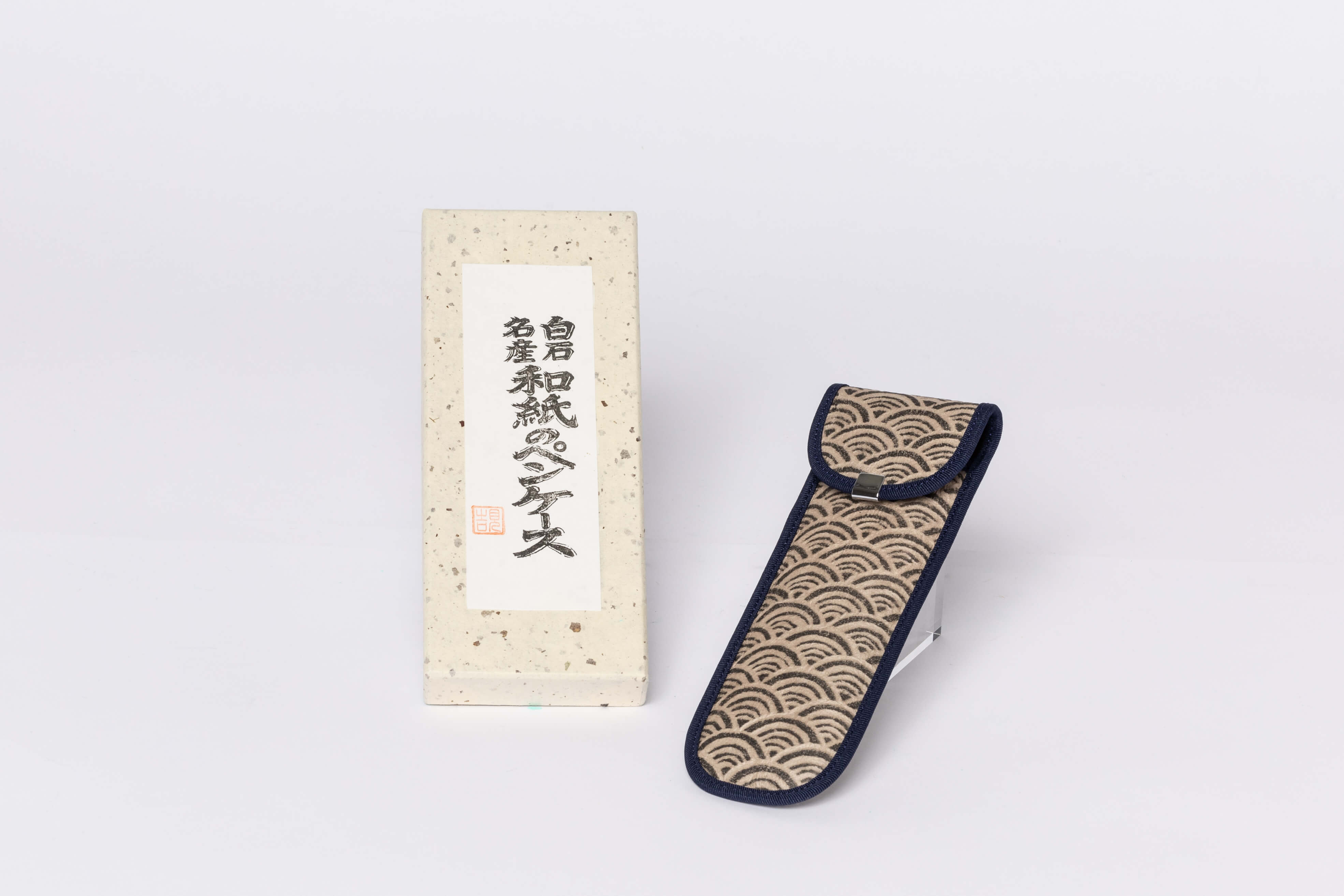
Shiroishi Washi Paper Pen Pouch — Shiroishi, The Historic Castle Town
Shiroishi City, located at the southernmost tip of Miyagi Prefecture, is known for its charming castle-town streetscape. In addition to the renowned Kamasaki and Obara Onsens, the city’s most iconic landmark is Shiroishi Castle, which preserves the samurai heritage of the Katakura clan, retainers of the Date family. Walking through the city, one encounters waterways running through its center and traditional Japanese storehouses scattered throughout, evoking the prosperity of its historic past.
“Shiroishi Washi,” with a history of more than 400 years, is one of the city’s three celebrated “white treasures” and is regarded as one of Japan’s finest traditional handmade papers. The craft flourished during the Edo period under the industrial and commercial policies of the Sendai Domain. In modern times, however, Shiroishi washi has become exceedingly rare. In 2015, production was entirely suspended when the sole remaining artisan retired and raw materials became scarce. Beginning in 2018, efforts to preserve this cultural heritage were revitalized through experiential workshops aimed at engaging younger generations. Known for its strength and durability, Shiroishi washi was once fashioned into paper garments. Today, it is widely incorporated into everyday items such as business card holders and handbags, allowing this historic craft to continue in contemporary life.
Gifted by Miyagi Prefecture
<Read More "Shiroishi Washi Paper Pen Case">
Related