:::
The Artistry of Bowls
Every carefully crafted bowl does more than simply hold food. It is also a work of art.
Curator / Pei Hsuan Wu
Updated at 2026-07-27
Introduction
This exhibition explores the bowl as its central theme. One of the objects most closely connected to our daily lives, the bowl is both a functional vessel and an expression of artistic craftsmanship. Its materials and methods of production reflect the maker's technical expertise while preserving the history and cultural heritage of the city from which it comes. Through the lenses of craftsmanship and aesthetics, this exhibition invites you to discover Japanese bowls created using a variety of materials and traditional techniques.
Tame-nuri Rice Bowl
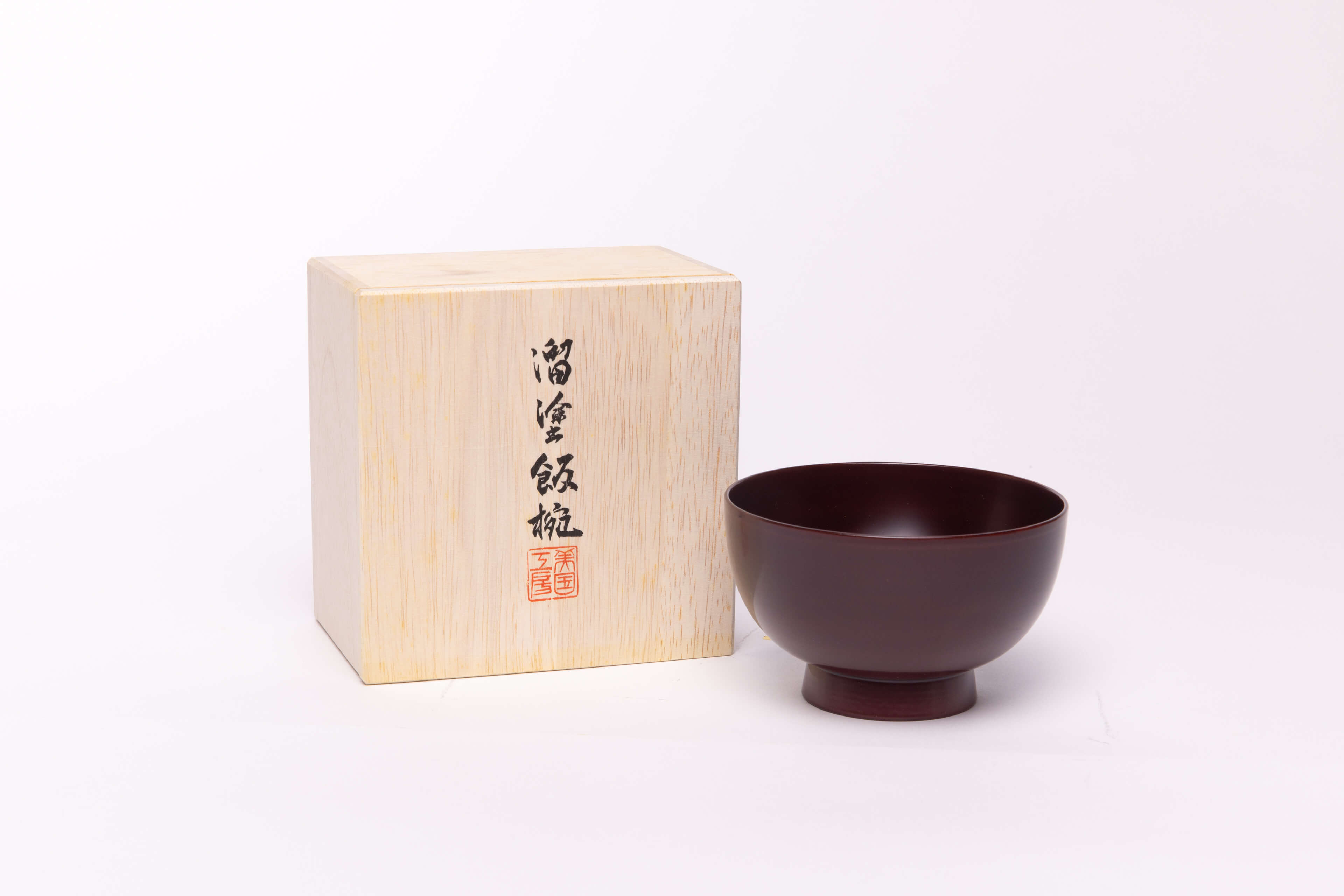
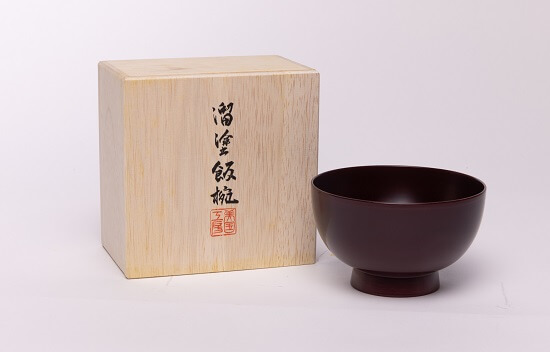
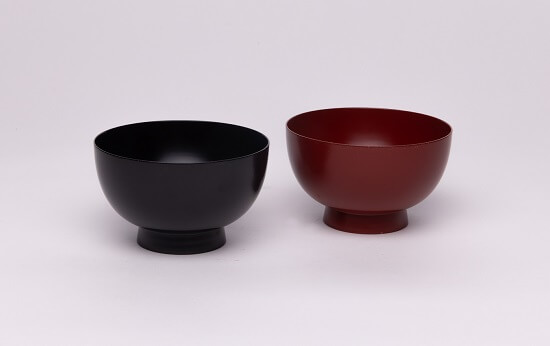
This rice bowl is finished using the traditional Tame-nuri lacquering technique. A vermilion base coat is first applied before being covered with a transparent layer of lacquer, allowing the rich crimson beneath to subtly shine through. The result is the deep, mellow luster that defines Tame-nuri lacquerware, creating a sense of depth and quiet elegance. The layered lacquer gives the bowl a texture that speaks to the passage of time and the unmistakable touch of the artisan's hand. As the quintessential vessel in everyday dining, the rice bowl is more than a practical object. It symbolizes the continuity of daily life and the memories built around shared meals, reflecting the cultural belief that ordinary objects can carry enduring meaning. The celebrated Japanese writer Jun'ichirō Tanizaki captured the beauty of lacquerware in In Praise of Shadows:
〝Only in such dim, subdued light can the beauty of Japanese lacquerware truly reveal itself...〞
His words offer a fitting reflection on the aesthetic spirit embodied by this Tame-nuri bowl, whose beauty quietly unfolds through the changing play of light and shadow in everyday use.
Gifted by Moriyasu KAMADA, Chairman, Tourism Council of Representatives, Kagawa Prefectural Assembly
<Read More "Lacquerware - Tame-nuri Rice Bowl">
Traditional Lacquer Bowl
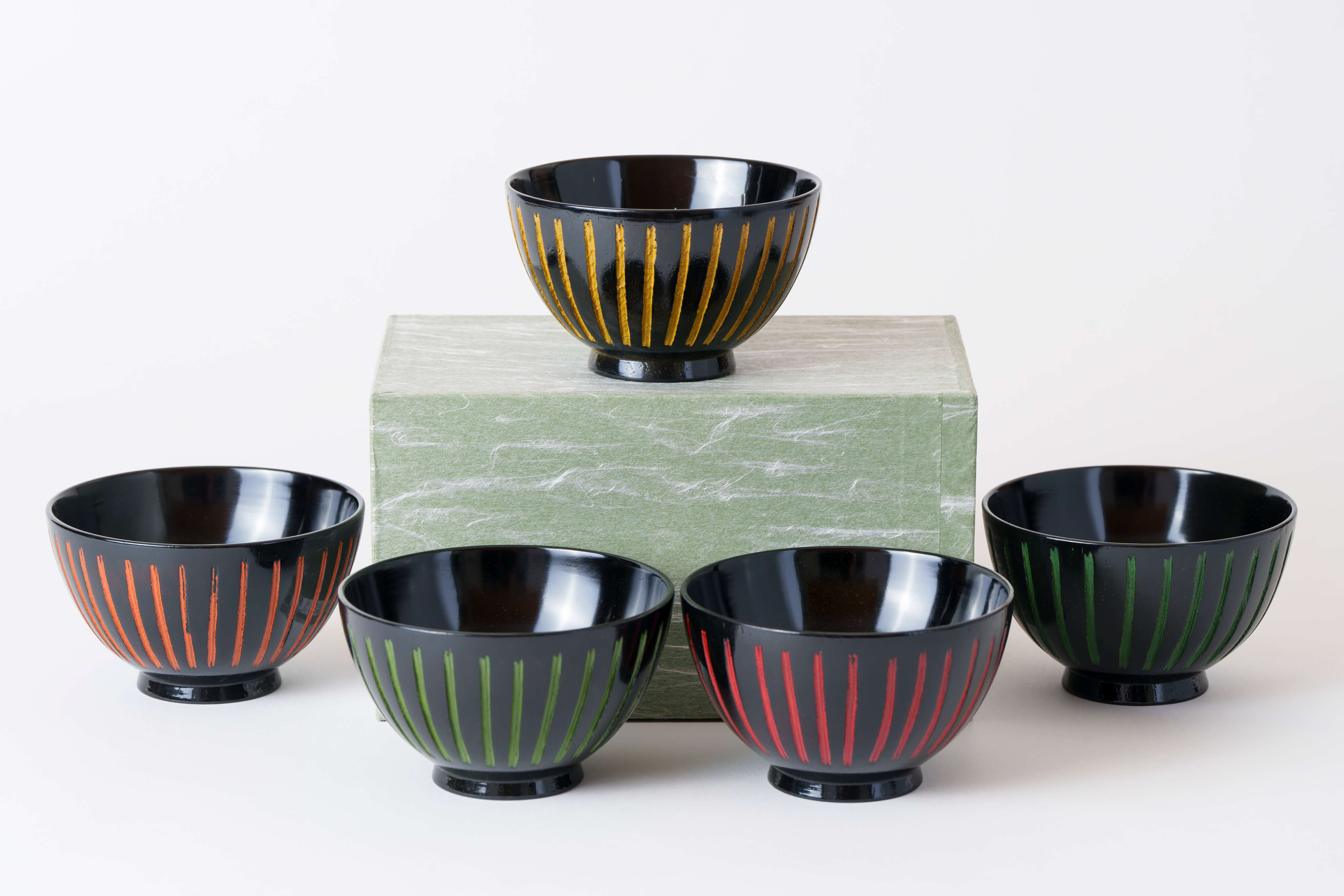
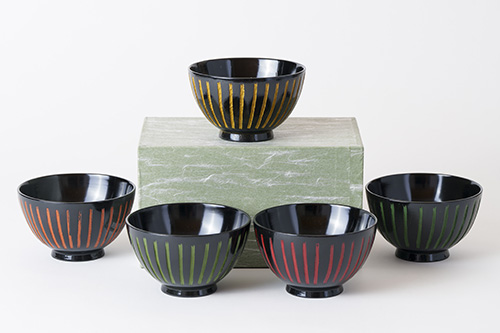
Crafted on a wooden base, this multicolored lacquer bowl showcases the intricate artistry of traditional lacquerware. The artisan first carves decorative motifs into the surface before carefully filling the recessed patterns with layers of red, orange, yellow, green, and other colored lacquers. Through repeated polishing, the colored lacquer becomes perfectly level with the surrounding surface. A final coat of black lacquer is then applied, allowing the five vibrant colors embedded beneath to stand out with remarkable clarity. This gift bowl is one of the signature works of Kagawa lacquerware. Every stage of its creation, from selecting the wood and carving the design to applying each layer of lacquer, is completed entirely by hand. The finished piece beautifully demonstrates the meticulous craftsmanship and distinctive aesthetic traditions that have made Kagawa lacquerware so highly regarded.
Gifted by Ichiro OYAMA, Chairperson, Japan-ROC Friendship Parliamentarians Union, Kagawa Prefectural Assembly
<Read More "Traditional Lacquerware Bowls">
Sanuki-bori Bowl
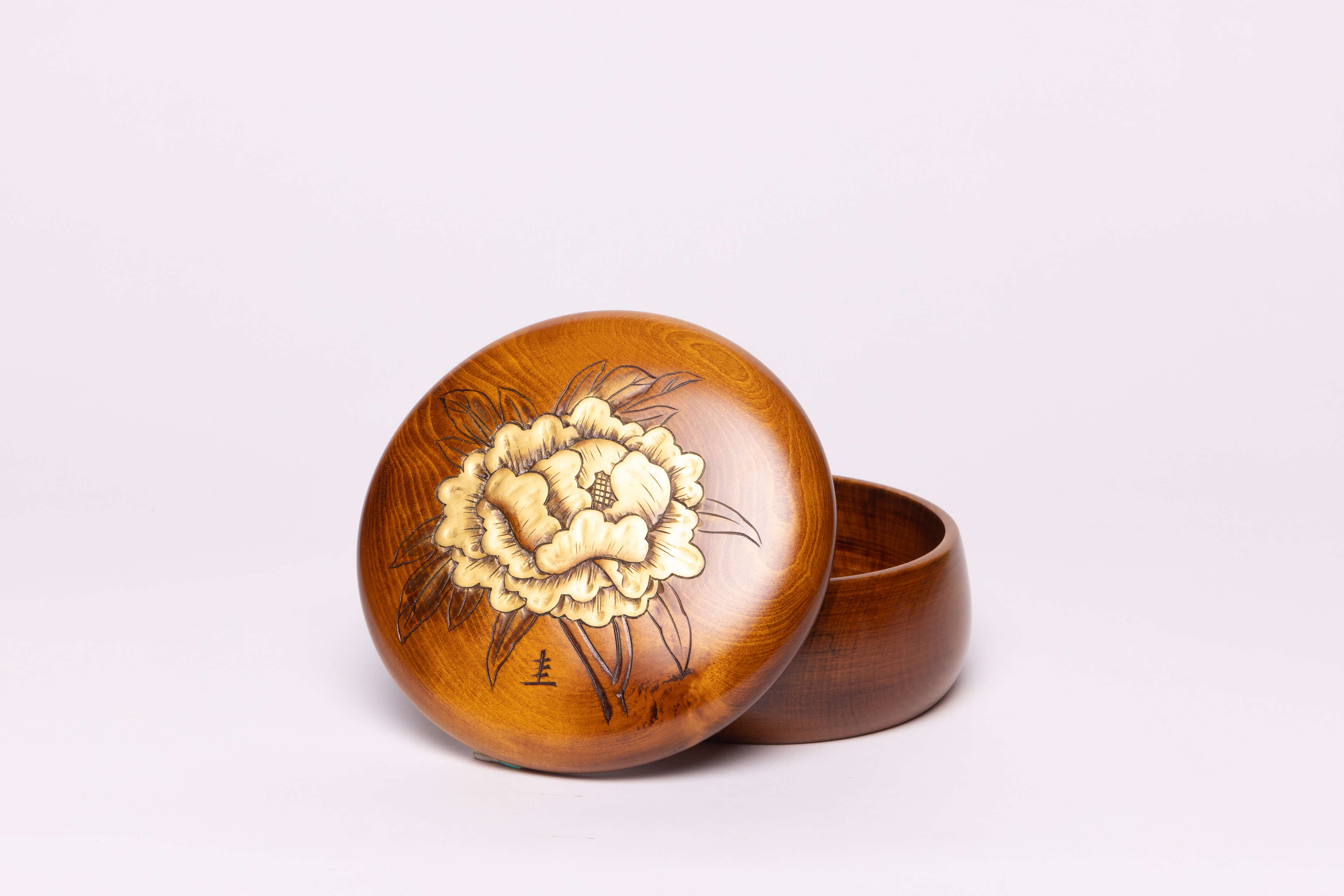
Carved from solid wood, this lacquer bowl intentionally preserves the natural grain and texture of the material, allowing the wood itself to become part of the design. Created for everyday use, it balances practical function with an appreciation for the warmth and beauty of natural materials.
This piece is made using the Sanuki carving technique, in which the form is first carved before layers of colored lacquer are applied. The bowl is decorated with a peony, a flower traditionally associated with prosperity, abundance, and good fortune. Its luxuriant, layered petals have long symbolized flourishing success and happiness.
Lacquerware is an art that rewards patience. Each layer of lacquer must dry completely before the next can be applied, followed by careful polishing and refinement. Through this time-intensive process, the rich color, depth, and luminous finish gradually emerge, making every completed piece the product of countless hours of skilled craftsmanship.
Gifted by Moriyasu KAMADA, Chairman, Tourism Council of Representatives, Kagawa Prefectural Assembly
<Read More "Sanuki-bori Bowl">

Sanuki Udon and Shodoshima Olive Lacquer Bowl
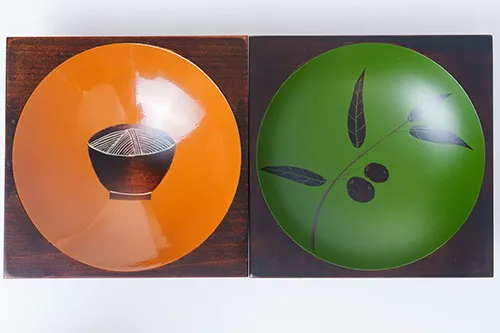
The natural wood grain remains clearly visible beneath the lustrous lacquer finish, giving these bowls a warmth and character that highlight the beauty of the material itself. Decorated in soft shades of green and orange, the bowls features illustrations inspired by two of Kagawa Prefecture's best-known specialties: Sanuki udon and Shodoshima olives. Together, they celebrate the region's culinary heritage and natural landscape. Sanuki, the former name of Kagawa Prefecture, has long been synonymous with exceptional udon noodles. Over generations, udon has become an enduring symbol of the region's food culture, and today Kagawa boasts one of the highest rates of udon consumption in Japan. The story of Shodoshima olives began in 1908, when olive cultivation was introduced as part of a regional development initiative during the Meiji era. Over the decades, olives evolved from an agricultural crop into a cultural icon of the island, inspiring not only local cuisine but also arts and crafts. By bringing together these two beloved local specialties, the bowl weaves food, industry, and craftsmanship into a single work of art, creating a visual expression of Kagawa's unique regional identity.
Gifted by Toyohito IKEDA, Governor, Kagawa Prefecture
<Read More "Lacquer Bowls with Sanuki Udon and Shodoshima Island Olive Patterns">

.JPG)
.JPG)
Related