:::
Building Bonds Through Fans
The origins of the fan are surrounded by many different theories, and over time it has taken forms such as the silk fan, round fan, and folding fan. Historical references can be found in works including Gujinzhu (古今注) from the Jin dynasty and Duyizhi (獨異志) from the Tang dynasty. Originally used for screening, ceremonial processions, and displays of status, fans gradually evolved into essential props in traditional theater and dance, where they extend and enhance the performer’s movements. They also became practical objects for shading the sun and creating a cooling breeze. At the same time, the designs and inscriptions painted across the fan surface offer a graceful way to express personal taste and style.
Curator / Tom
Updated at 2026-07-27
Introduction
Since ancient times, the fan has been a treasured accessory of scholars and refined gentlemen. Through exquisite craftsmanship, calligraphy, and painting, it has come to embody the depth of Eastern philosophy and aesthetics. The opening and closing of a folding fan reflect the duality of emptiness and substance in Eastern thought. When opened, it suggests the expansion of the universe. When folded, it conveys restraint and simplicity. Together, these movements express an ability to advance or withdraw with ease and good judgment. While the folding fan is defined by its rhythm of expansion and contraction, the round fan carries a different set of associations. Its shape, as full and luminous as the moon, naturally evokes reunion, completeness, harmony, and perfection.
Japan: Boshu Uchiwa-Round Fan
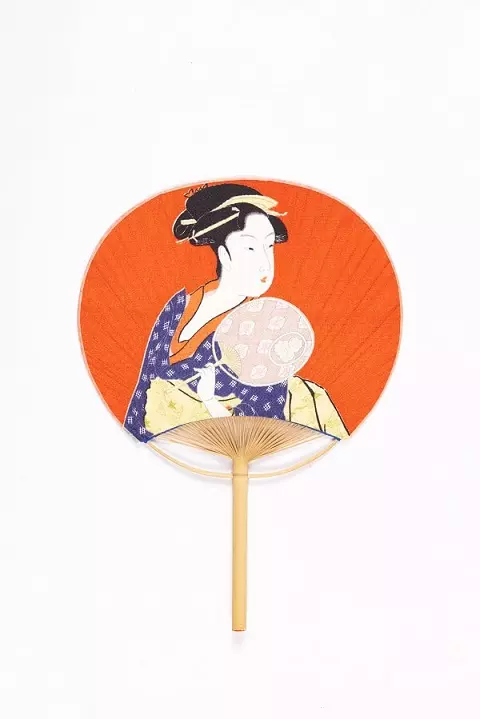
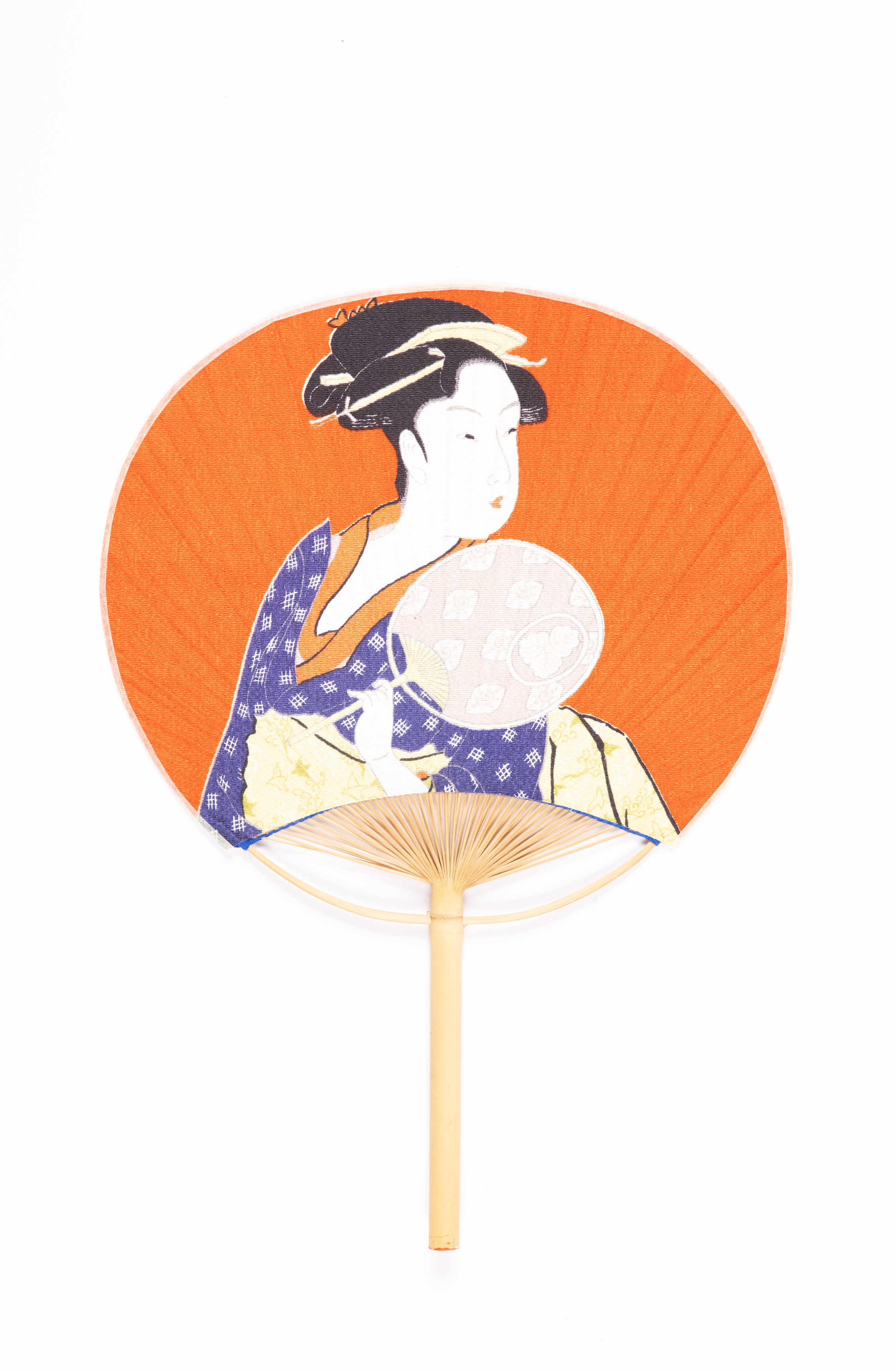
The Boshu Uchiwa of southern Chiba Prefecture is regarded as one of Japan’s three great traditional round fans. Its origins date back to the Edo period, when the region was renowned for producing high-quality medake bamboo. At the height of production, nearly eight million fans were made each year, most of them shipped wholesale to Edo, now Tokyo. Known for its graceful semicircular shape, each fan is created through a long and demanding series of steps. These include selecting the bamboo, removing the outer skin, polishing, soaking, cutting, softening, drilling, weaving the ribs, forming the handle, shaving the bow, shaping, mounting the fan surface, trimming, and finishing the edges. Most remarkably, the ribs and handle are formed from a single piece of bamboo. This seamless construction, known as the integration of ribs and handle, is the defining feature of Boshu Uchiwa and makes it highly valued both as a work of craftsmanship and as an elegant interior decoration.
Gifted by Kensaku MORITA, Governor, Chiba Prefecture
<Read More "Boshu Uchiwa">
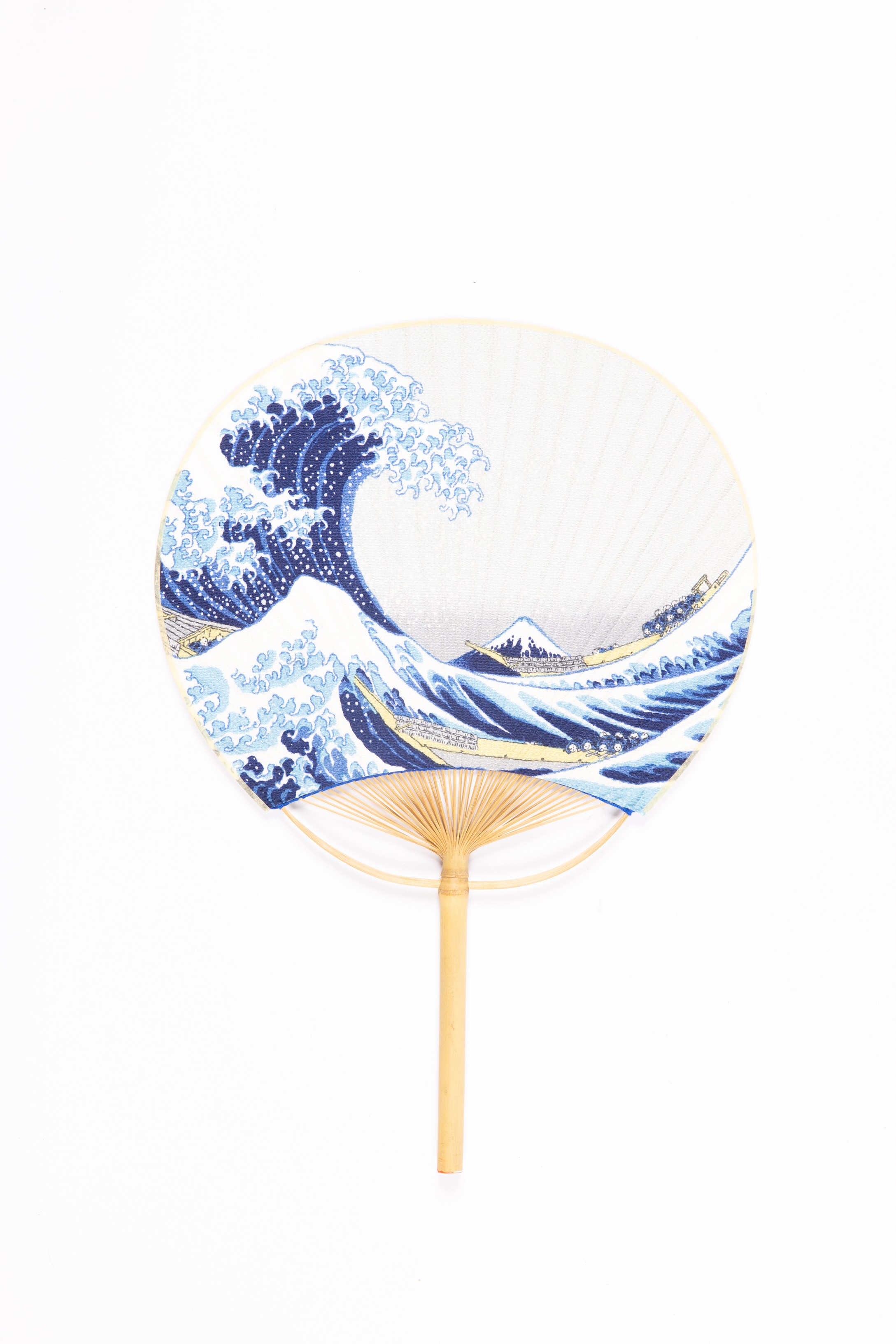
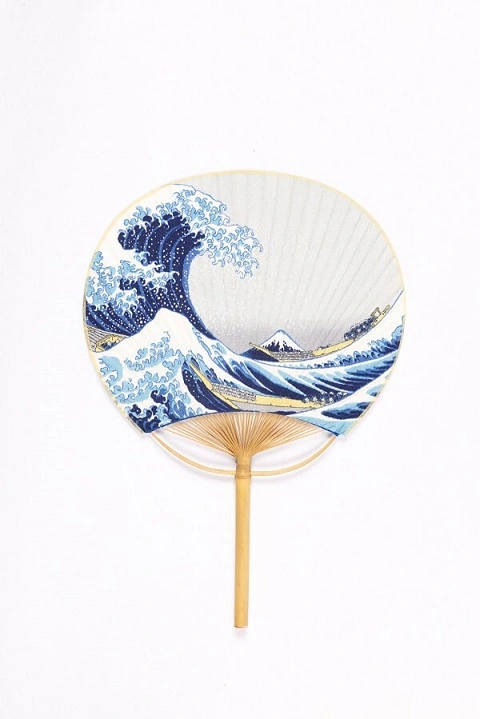
Japan: “The Great Wave off Kanagawa” Uchiwa-Round Fan
With Mount Fuji rising in the distance, The Great Wave off Kanagawa captures a towering wave crashing down upon fishing boats as the boatmen struggle for survival. It is one of the most celebrated works by the great Japanese ukiyo-e artist Katsushika Hokusai.
On the fan surface, the lone boats, enormous wave, and distant Mount Fuji come together to create a striking contrast between movement and stillness, destruction and permanence. The image suggests that although an individual, represented by the fragile boat, may appear powerless before the overwhelming force of nature, symbolized by the wave, steadfast faith and a guiding spiritual ideal, represented by Mount Fuji, can provide the strength to overcome hardship and uncertainty.
Gifted by Kazuhiko YOSHIDA, Exective Director for Public Relations, Policy and Planning Department, Chiba Prefecture
<Read More "'The Great Wave off Kanagawa' Uchiwa">
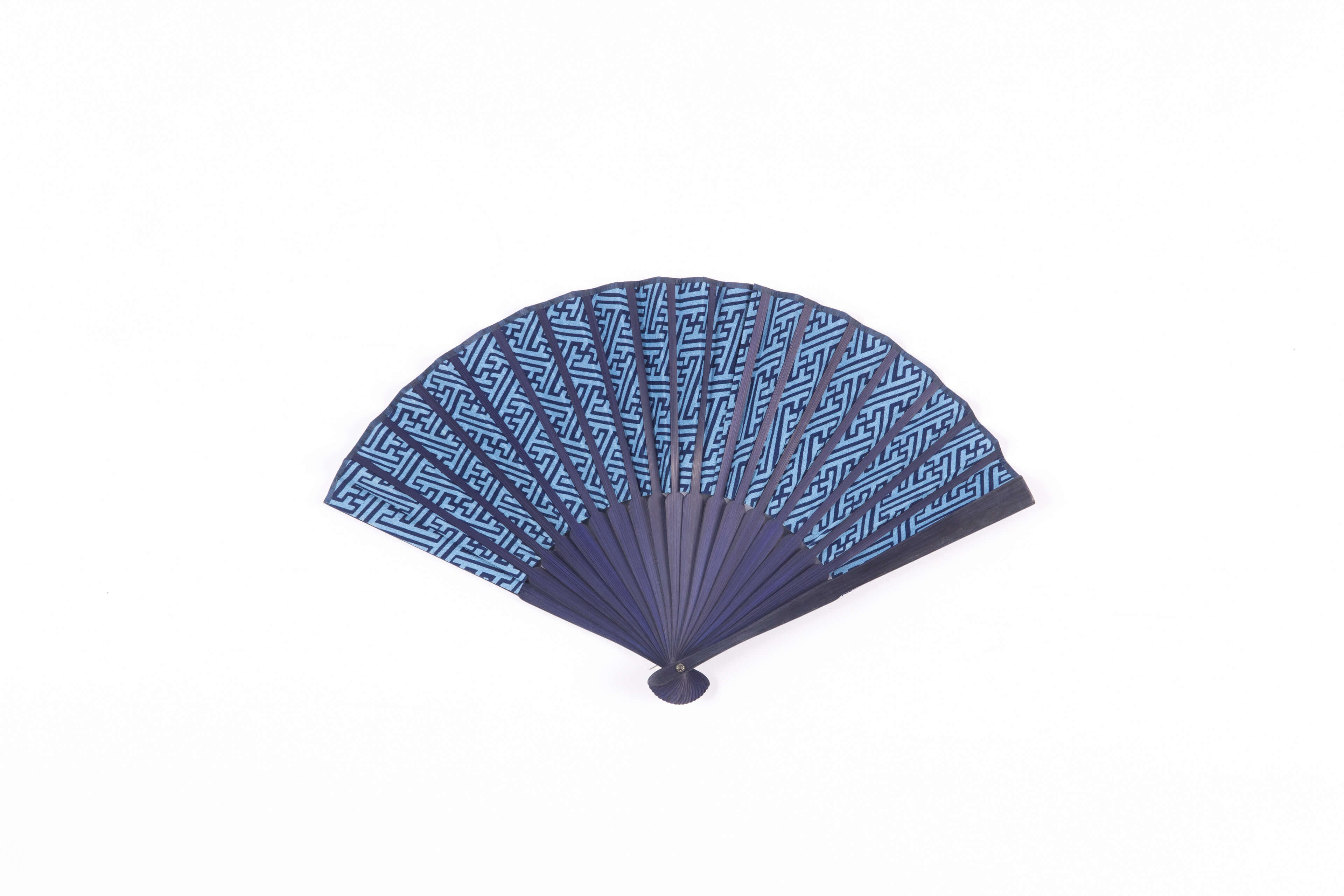
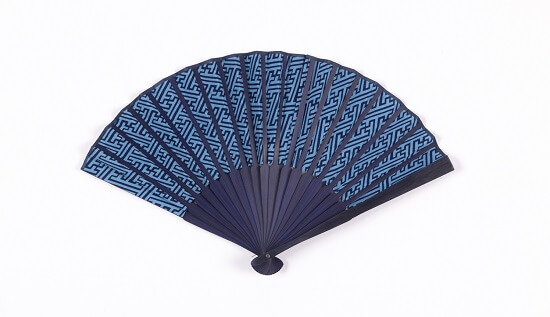
Japan: Ogi-Folding Fan
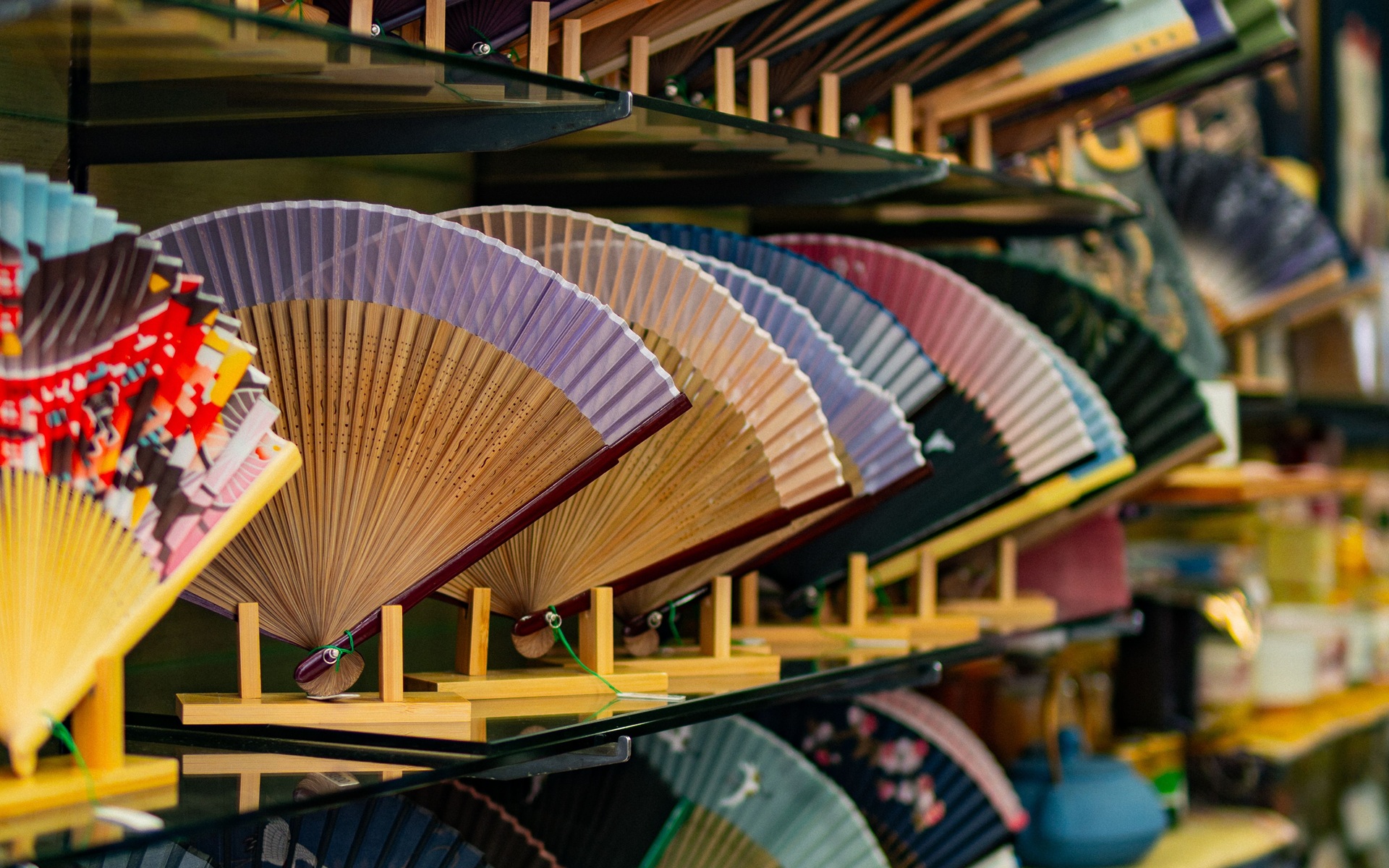
In Japanese diplomacy and ceremonial traditions, the folding fan is closely associated with the auspicious concept of Suehiro, meaning “widening toward the end.” Its shape, which expands from a narrow base into a broad arc, symbolizes growing prosperity, continued success, and a future that becomes ever brighter. This positive imagery has made the folding fan a familiar presence in both daily culture and traditional customs.
The folding fan also embodies the etiquette of knowing when to come together and when to maintain distance. It represents propriety, respect, and peaceful boundaries, encouraging closeness without overfamiliarity and harmony founded on mutual courtesy. More than a finely crafted object, the folding fan is a spiritual symbol within Japanese culture. It conveys hopes for a prosperous future, preserves courtesy in human relationships, and serves as a link between people, the natural world, and the divine.
Gifted by Shinichi OKUYAMA, Director, Education Promotion Department, Chiba Prefecture
<Read More "Ogi">
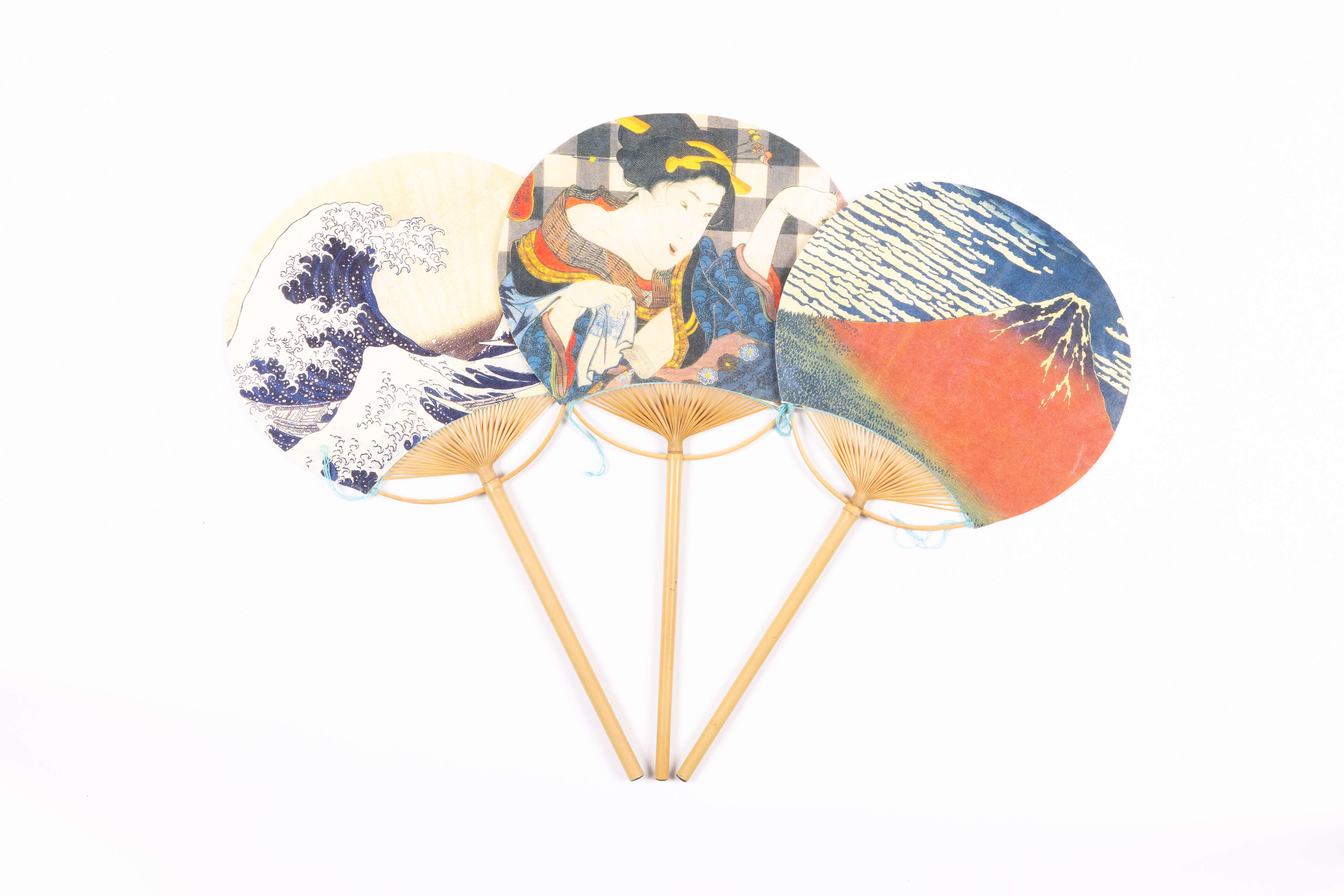
Japan: Bamboo Uchiwa-Round Fan
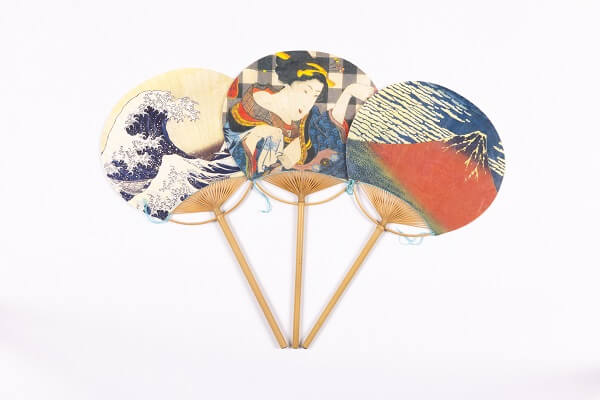
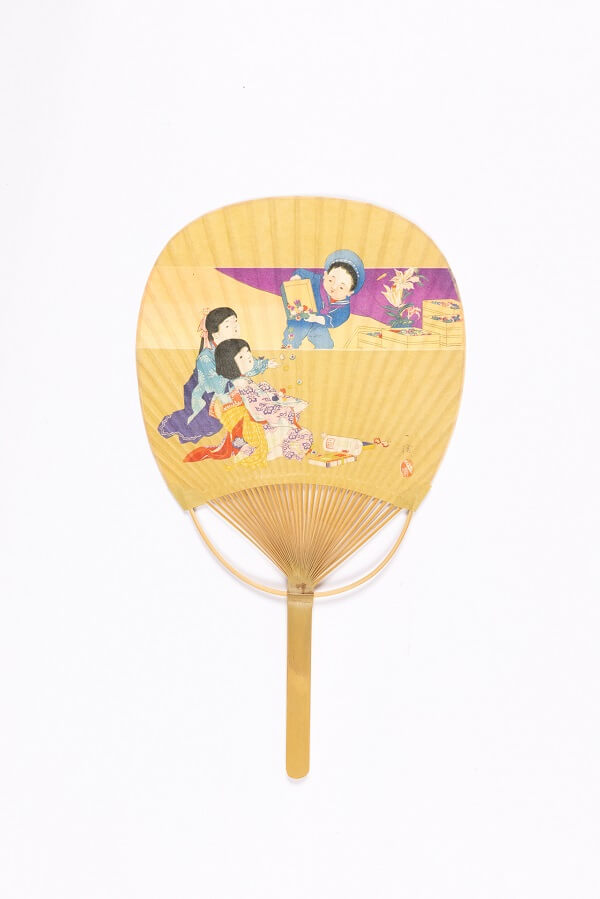
Unlike the collapsible folding fan, or Suehiro, the bamboo Uchiwa has a fixed round or oval structure that cannot be folded. In Japanese history, one form known as the gunbai uchiwa was used by military commanders to direct troops on the battlefield. Its surface was often decorated with the heavenly stems, earthly branches, and the twenty-eight lunar mansions, which strategists consulted when assessing the likely fortune or outcome of a battle.
While the folding fan was more closely associated with courtly life, ceremony, and formal exchange, the round fan became an essential part of everyday life after the Edo period. Common people used it to cool themselves during the summer, take part in festivals, and fan household fires. For this reason, the Uchiwa conveys a more relaxed and heartfelt form of friendship. It suggests the warmth, familiarity, and easy companionship shared with close friends and family, without the need for excessive formality.
Gifted by Yukio JITSUKAWA, Former Member, House of Representatives
<Read More "Bamboo Uchiwa">
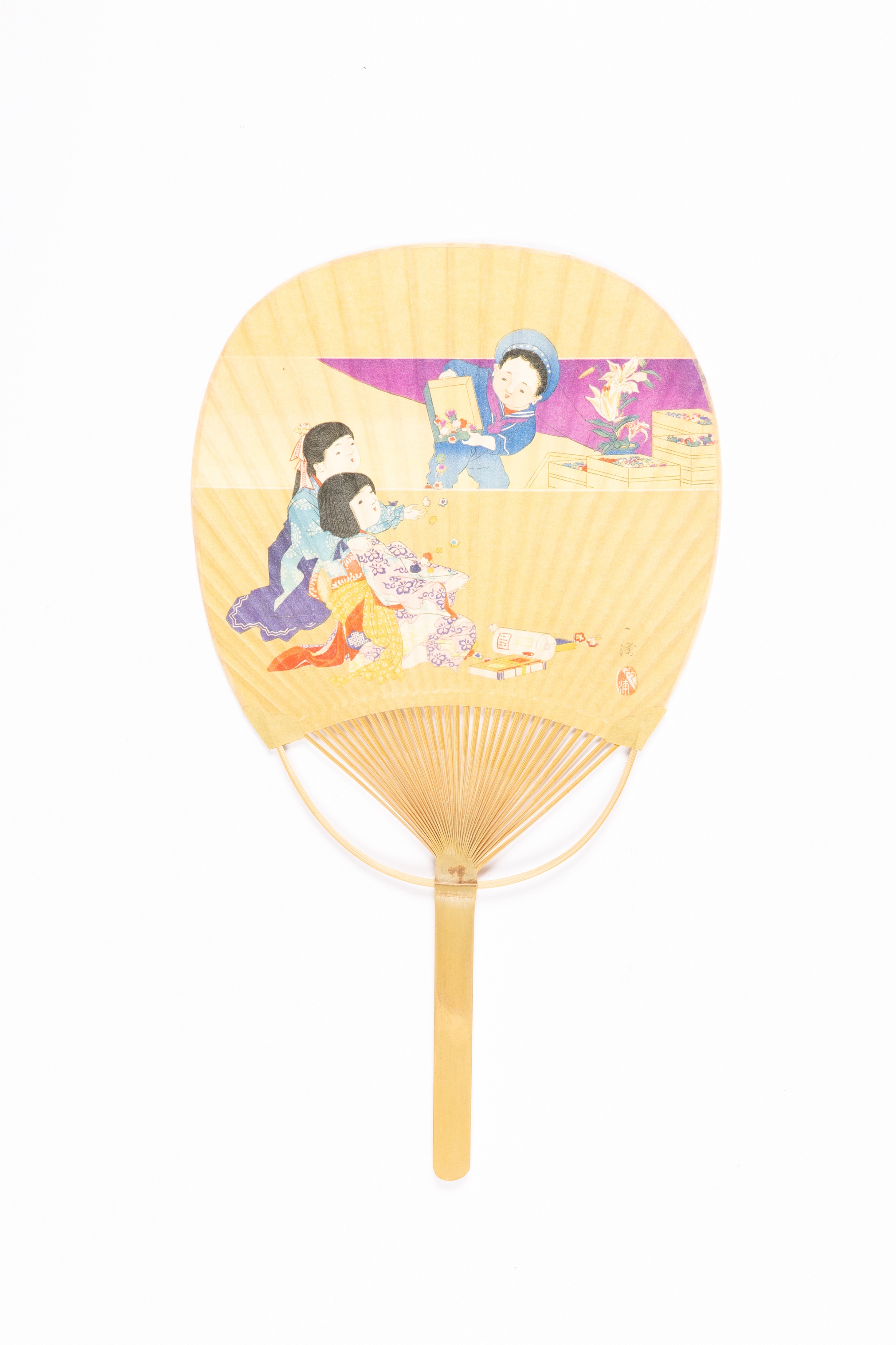
Japan: Bamboo Uchiwa-Round Fan
The Marugame Uchiwa is a renowned traditional craft from Kagawa Prefecture. In 1997, it was officially designated a traditional craft by Japan’s Ministry of Economy, Trade and Industry. Celebrated for its rich history and exceptional craftsmanship, it has gained international recognition and accounts for as much as 90 percent of Japan’s domestic round-fan market. The tradition began in the Edo period, when samurai seeking additional income sold the fans as souvenirs to pilgrims visiting Kotohira-gū Shrine on Shikoku. Its most famous feature is the character 金, meaning “gold,” printed against a red background. In traditional Japanese culture, this design serves as a protective charm believed to ward off misfortune, preserve safety, attract wealth, and bring good luck.
Gifted by Moriyasu KAMADA, Chairman, Tourism Council of Representatives, Kagawa Prefectural Assembly
<Read More "Bamboo Uchiwa">